

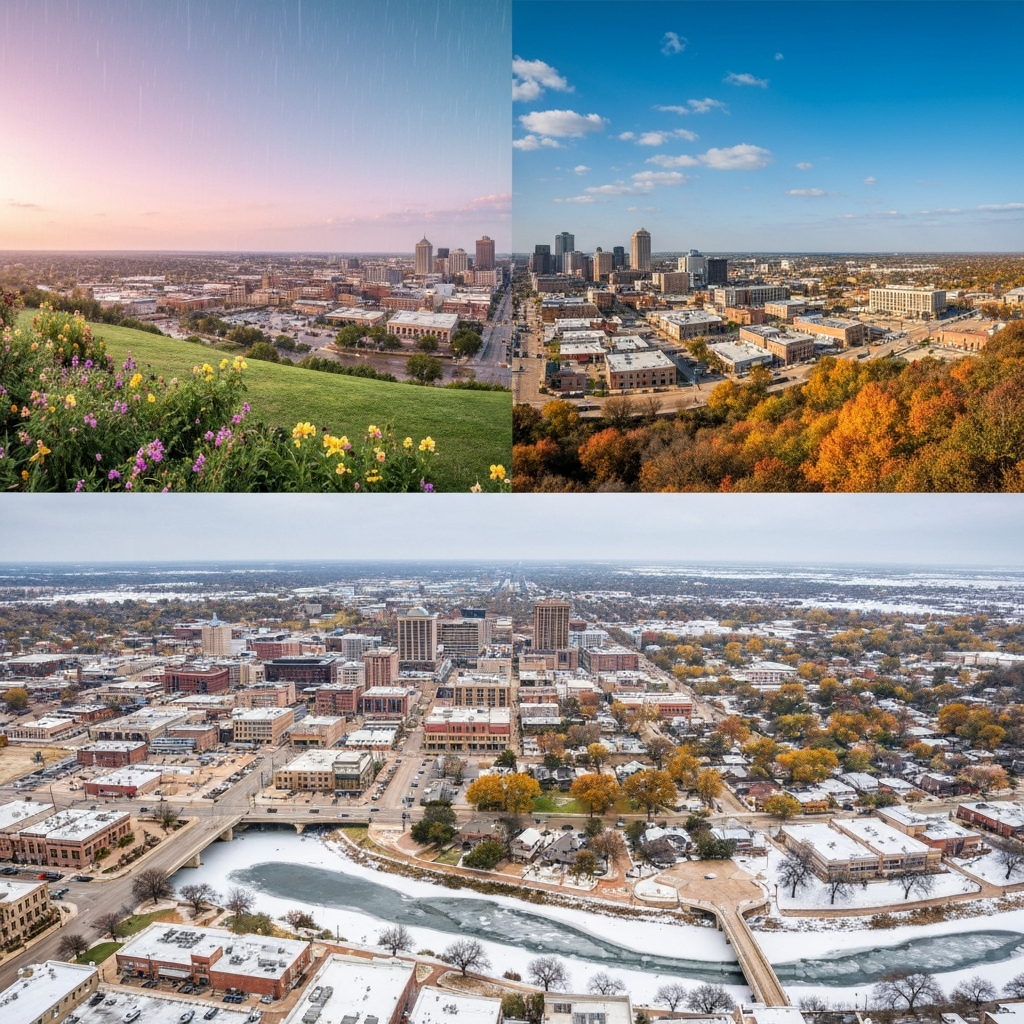
McKinney, Texas, located in the humid subtropical region, experiences a diverse range of weather patterns throughout the year. Understanding these patterns is essential for residents to prepare for seasonal changes and environmental challenges.
Seasonal Weather Patterns
Spring
Spring in McKinney brings mild temperatures and increased rainfall. Average temperatures range from lows of 45.8°F in March to highs of 75.1°F in April. This season is characterized by frequent thunderstorms, which can sometimes lead to flooding. Residents should stay informed about weather forecasts and be prepared for sudden changes.
Summer
Summers are hot and humid, with average high temperatures reaching 94.9°F in July. The city often experiences extreme heat events, defined as temperatures hovering 10 degrees or more above the average high for the region, lasting several weeks. It’s crucial to stay hydrated, limit outdoor activities during peak heat, and be aware of heat advisories issued by local authorities.
Fall
Fall offers a respite from the summer heat, with temperatures gradually cooling. October sees average highs of 78.4°F and lows of 55.5°F. This season is generally pleasant, making it ideal for outdoor activities.
Winter
Winters are mild, with average lows of 34.3°F in January. While snowfall is rare, occasional cold fronts can bring freezing temperatures. Residents should be prepared for sudden cold snaps and ensure their homes and vehicles are winter-ready.
Environmental Considerations
Floodplain Management
McKinney’s Environmental Management department oversees floodplain protection and development, adhering to FEMA and local requirements. Proper floodplain management is vital to minimize the risk of property damage and ensure public safety.
Stormwater Management
The city’s Stormwater Management Program aims to reduce pollutants entering lakes and streams. Residents can contribute by properly disposing of waste, maintaining their properties, and reporting any issues related to stormwater drainage.
Air Quality
McKinney reports moderate air quality, with an average AQI of 53.9, which is higher than the national average. It’s important for residents, especially those with respiratory conditions, to monitor air quality reports and take necessary precautions during days with higher pollution levels.
Preparing for Severe Weather
Severe weather, including thunderstorms, lightning, extreme heat, and occasional winter weather, occurs frequently in McKinney. Residents should stay informed through local news outlets and the city’s official channels. Having an emergency kit, creating a family communication plan, and understanding local evacuation routes are essential steps in preparedness.
By staying informed and proactive, McKinney residents can effectively navigate the city’s diverse weather patterns and contribute to a safer, more resilient community.